By Michael Howard
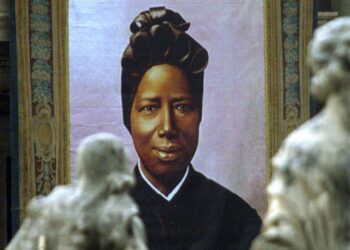
SEPTEMBER 5 marked the feast day of St Teresa of Kolkata (Mother Teresa), whose life of sacrifice and devotion propelled her to be one of the most recognisable faces of the 20th century.
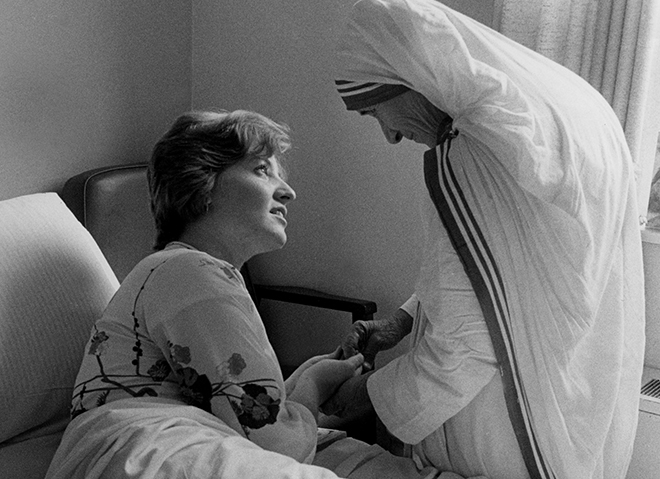
To many, Mother Teresa’s iconic image is a reflection of persistence and dedication in the face of life’s most severe difficulties.
The voice of Jesus guided Mother Teresa to spend her life amongst the poorest of the poor, in a nearly unimaginable world of disease and famine.
Mother Teresa is among the quintessential Catholic figures of the 20th century and was only canonised in 2016.
As such, she is a saint who many people feel a real connection to, as they witnessed her faith commitment and keenly followed her throughout her lifetime.
Mother Teresa is an example of a living saint and a person whose qualities we should aspire to imitate.
Yet despite the call for us to be saints like her, when presented with the reality of the suffering she witnessed and underwent, we may feel the task is wholly unattainable.
How on earth can I really be like Mother Teresa? The strength she had in a day, I have in a lifetime.
On one hand, yes, to be like Mother Teresa is likely too big a task.

I don’t expect to spend my life in the slums of Kolkata. I am unlikely to achieve the extraordinary witness to Christ that she embodied.
However, it is not in the saintliness of Mother Teresa that we find our connection to her, but rather in the humanity of Mother Teresa that we may find the inspiration to emulate her.
Mother Teresa wrote at length of her inner spiritual struggle, of the spiritual dryness, which spanned, in one way or another, almost 50 years of her life.
Her frank admission was that during much of her vocational life, including at the height of her popularity as a great world figure, Mother Teresa seldom felt the presence of God.
How can such a holy and revered figure be absent of the feeling of God?
If we are honest, as Christians, this revelation is not wholly unsurprising.
How often have each of us, in the quiet corners of our lives, experienced a form of spiritual emptiness, sadness or despair? Perhaps even just a “separateness” from God?
In her humbleness, Mother Teresa reveals an aspect of her life that allows those of us, who are far from her state of grace, to relate to her in a way we may not have previously realised.
If a living saint can experience an absence of the presence of God, perhaps we are closer to following in her footsteps then we may realise.
It is the honesty of Mother Teresa revealing her spiritual dryness, and her response to these trials and tribulations, that we should draw inspiration from.

Mother Teresa persisted in her work and in her faith, despite the feeling of the absence of God.
Thomas Merton, Trappist monk and Catholic author, wrote of a similar path to sainthood just as Mother Teresa was starting her work.
Merton writes, “if we are to be ‘perfect’ as Christ is perfect, we must strive to be as perfectly human.”
As such, “sanctity is not a matter of being less human, but more human.”
This encapsulates the life and work of Mother Teresa, whilst also rebutting any paradox as to her sainthood and spiritual dryness.
Saints are not extra-human, but are wholly human, just as Christ was wholly man and wholly God.
Mother Teresa provides us with an example of something so very important – she was a Christian who placed her ultimate trust in her God, with complete faith that He would carry her through the most difficult times.
It is the example of complete trust and faith, despite the difficulties, that ensures Mother Teresa remains a relatable figure for Christians around the world.
A saint no doubt, but also a human being who points us in the direction of a fully Christian life.
Michael Howard is studying law at the Queensland University of Technology, Brisbane. As a member of St Gerard Majella’s Church, West Chermside, he has developed a passion for Catholic thought. He works part-time at The Catholic Leader.