CATHOLICS are being asked to take the lead and raise their voices for fairness and compassion for asylum seekers in the current national debate over boat arrivals.
Brisbane archdiocese’s Catholic Justice and Peace Com-mission made the call following a recent front-page story in The Sunday Mail that the commission’s executive officer Peter Arndt said had the effect of “de-humanising asylum seekers and robbing them of their God-given dignity”.
Mr Arndt appealed to Catholics to defend the right of people to seek asylum in Australia and to be treated as human beings – “not as demons to be feared or as objects to be used for political or commercial benefit”.
“Both major (political) parties are trying to show that they are tough with boat arrivals and they are causing a lot of suffering and unfairness for people seeking asylum,” he said.
Mr Arndt said all Australian politicians and citizens needed to remember Australia was a signatory to the international convention that recognised the right of people fleeing persecution and violence to seek asylum.
“We, as a nation which says it respects and defends human rights, should not be trying to turn asylum seekers away or get other countries to hold them in unsatisfactory conditions,” he said.
“Whipping up fears that we are being over-run by asylum seekers is simply dishonest and leads to mis-treatment of people.”
Mr Arndt’s comments are supported by statistical data provided by the Immigration Department in its 2008-09 annual report which shows a 12 per cent reduction on the previous year in the number of people held in immigration detention.
The report also contains information on nationalities seeking “onshore protection” in Australia and their means of arrival, indicating slightly more than a quarter coming by “irregular maritime arrivals”.
Asylum seekers arriving by boat are primarily Hazaras from Afghanistan and Tamils from Sri Lanka and, while both groups fall into the top 10 nationalities seeking onshore protection, the largest numbers come from mainland China by plane.
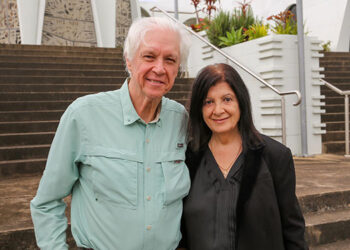
CJPC member and manager of the Tigers refugee soccer team Camilla Cowley said Hazara Afghanis seeking asylum have no option other than to make the journey by boat.
“The only Afghans coming at the moment are all Hazaras, the indigenous minority who have been fleeing Afghanistan since 1998-99, and their traditional refuges are no longer available,” Ms Cowley said.
She said, in the past, Hazaras had sought refuge in Iran or in the “semi-safe” city of Quetta in southern Pakistan but those locations were no longer safe.
“Iran is very, very difficult,” Ms Cowley said.
“They have to hide and they are not allowed to work or go to school, and now the Iranians have begun snatching them off the streets and throwing them back across the border, and often the rest of the family has no idea what has happened to them.
“The other traditional safe haven of Quetta … is where the Taliban scarpered to when America came into Afghanistan, and they now call it ‘Taliban Central’ so they are not safe there either.”
Australian Catholic Social Justice Council executive officer John Ferguson, in a recent ACSJC briefing, labelled the current debate “cruel”.
“There is a potent mix of sensationalised media reporting, political point scoring, xenophobia and resentment,” Mr Ferguson wrote.
“The consequence is that the circumstances and need of people who are in desperate situations is forgotten.
“At worst, they are being demonised and portrayed as a threat to our way of life.”
Mr Ferguson urged a different response than that taken by politicians.
“Imagine a nation encouraged to be proud that we are one of only a few in the region to have signed the UN Convention on the Status of Refugees,” he said.
Mr Arndt called on Catholics to reject “the attempts by fear mongers in politics and the media to foster resentment towards our fellow human beings”.
“As Christians, we see asylum seekers as our sisters and brothers,” he said.
“It is our responsibility to defend their human dignity and to encourage our politicians and the community to treat them with compassion and fairness.”