“I DIE the king’s good servant, but God’s first,” go the famous last words of St Thomas More but last words might just become a thing of the past.
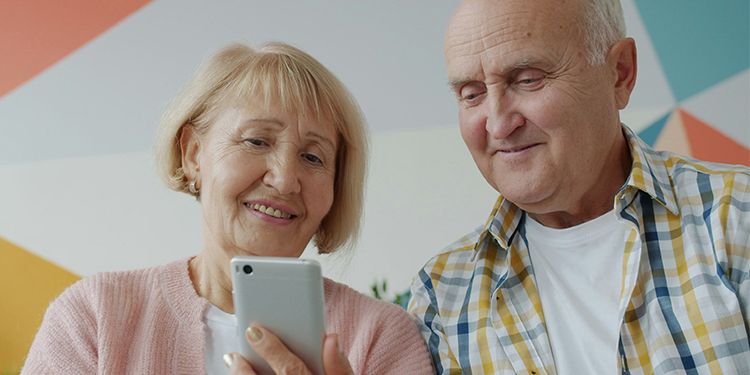
A new app available on your smartphone, 2wai, promises its users the ability to capture their loved ones with just three minutes of video so that they can continue talking to them after their death.
The technology uses artificial intelligence to create an avatar that appears and talks in the likeness of the dead person.
The app has been met by criticism online and in the media.
Dr Steve Matthews, who is a senior researcher at Australian Catholic University’s Plunkett Centre for Ethics, said it was normal for people to reject new technology and to feel like it was “creepy” or “terrible”.
He said the same feelings were shared about many new technologies that have become commonplace.
He said when photography took off in the 1800s, one popular form was post-mortem portraiture, in which a dead person would be dressed nicely and posed for a final image.
Public reaction was negative, with detractors saying the practice was disturbing, violated privacy and involved “reanimating the dead unnaturally”, he said.
On the other side, Dr Matthews said the practice existed to console grieving families and, 150 years later, the portraits made for valuable visual records from the period.
The challenge to navigate with any new technology, Dr Matthews said, was the principle of dual use, where technology might be used for good or ill.
In the case of 2wai, he said, there might be situations where having avatars of the dead could serve a positive outcome.
You could imagine children walking through a museum, guided around the Egyptology exhibit by Cleopatra; or, a trauma therapy for people whose last mental images of a loved one were too painful to recall.
ACU philosophy senior lecturer Dr Margot Strohminger said she shared the “critical reaction” that has played out online.
At the same time, she said it was important for people to recognise that an avatar of a person was not the actual person.
She said while the avatars might superficially look and sound like the deceased person, the content generated by the technology was likely “very different” from what the actual person would have said in that situation if they were alive.
She said there was a risk that engaging with an avatar might cause people to let the avatar’s response take precedence over or replace their actual knowledge and memories of the deceased person.
It was normal, she said, for people to imagine how their deceased parent might react to a situation and instead of that impulse, “we might become very engrossed in watching the avatar and seeing what their response” might be.
Dr Matthews often posed the question to his first-year students – “can the dead be harmed?”
“We often think of the dead as being beyond harm,” he said.
While it was true that the dead could not experience physical harms, they were still vulnerable to attacks on their character, especially reputational damage in a case like 2wai, he said.
The key, he said, was informed consent.
He said he believed people had a reasonable right not to be simulated after their death without their consent.
In Australia, the Privacy Act only protects the living and there are no laws on the books about simulating a dead person.
Dr Strohminger said intuitively, it felt like a violation and “scary” if an avatar was being made without a person’s permission.
She said people who consented to the technology had to understand all the possible ways their likeness might be used.
She said it was even more important to get it right for the purpose of speaking to loved ones, where exchanges with the avatar might involve cherished and intimate memories.
It was also clear that many parts of AI function were impossible to track as it might involve millions or billions of parameters working in sync.
Dario Amodei, who is chief executive officer of AI tech giant Anthropic, wrote people “outside the field (of artificial intelligence) are often surprised and alarmed to learn that we do not understand how our own AI creations work”.
“They are right to be concerned – this lack of understanding is essentially unprecedented in the history of technology,” he wrote.
Dr Matthews also raised questions over controlling rights.
He said in his work consulting in healthcare ethics, there were often disagreements in families over treatment plans for a loved one or how a Will should be executed.
He suggested in a case like this the family’s decision also had to take into account the ownership rights set out in the terms and conditions of the app.
Another aspect was how the technology might affect a person’s end-of-life decisions.
Voluntary assisted dying is now available across Australia and one of the well-documented reasons why people consider euthanasia is a sense of being a burden on loved ones as their health deteriorates.
Technology like 2wai could affect a person’s end-of-life decisions with the promise of continual presence without physical burden.
In a speech in September, Pope Leo XIV pointed to the loss of humanity in the digital realm and warned that “extremely wealthy” people were investing in AI and “totally ignoring the value of human beings and humanity”.
“The danger is that the digital world will follow its own path and we will become pawns, or be brushed aside,” he said.
“I think the Church needs to speak out in this regard.”
He also revealed that someone had asked him for permission to create an artificial version of himself, so “that anyone could go to a website and have a personal audience with ‘the pope,’ and this pope created by artificial intelligence would give them answers to their questions”.
“I said, ‘I’m not going to authorise that’,” he said.
“If there’s anyone who shouldn’t be represented by an avatar, it seems to me, it’s the pope.”