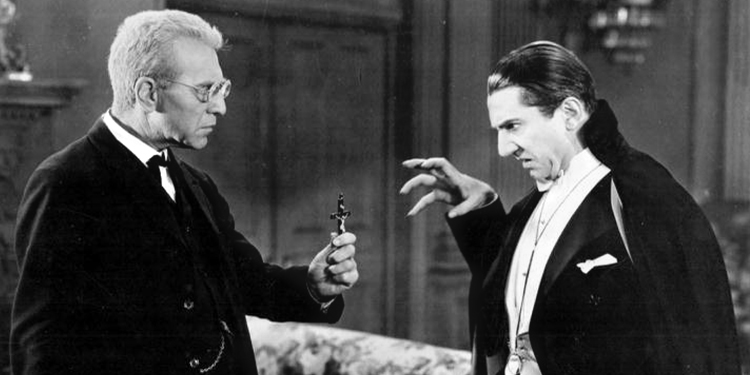
THE door of a Catholic Church is often the last place most people will haunt – except when it comes to a scary story.
When the lights dim in a scary movie or the page turns in a spine-chilling novel, often the author calls for a Catholic priest, a crucifix and holy water.
Whether Catholics want the attention or not, Hollywood executives and genre authors love to call upon the Church for their battles against evil.
And every October, as Halloween rolls around, that fascination resurfaces – the line between faith and fear thins once more.
Why do we seek out frights?
Australian Catholic University visual arts lecturer Dr Alasdair Macintyre is a hauntologist and has been interested in the idea of unexplainable phenomena since childhood.
He recently published his story piecing together the lost 1985 Australian ghost documentary, Haunted, in The Conversation.
Dr Macintyre said humanity’s fascination with horror comes from our inquisitiveness.
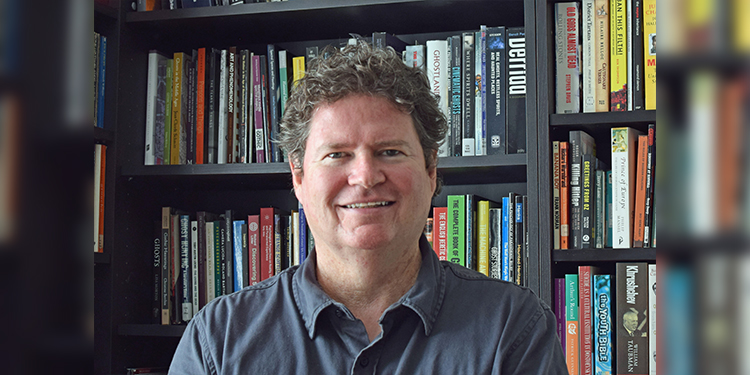
He said humans chased thrills and the idea of experiencing a scary situation in the safety of a cinema, a book or on their own couch was appealing.
“We know we’re going to get scared, but we know it’s a safe scare,” he said.
He said it was in a similar category to bungee jumping and skydiving.
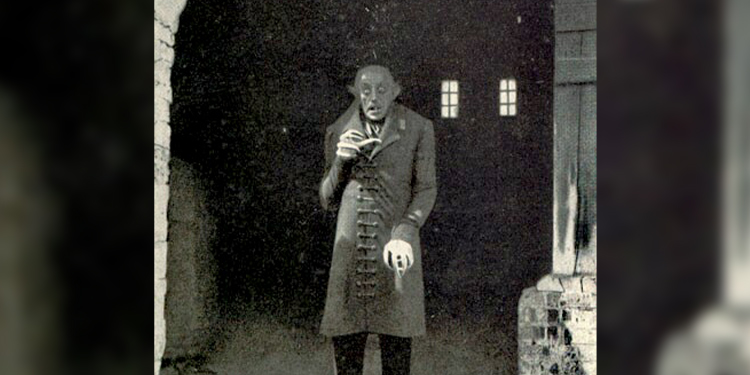
Since 1922’s Nosferatu, which now appears on a Vatican list of significant films, audiences have flocked to partake in fright nights for more than a century.
What scares us?
Public speaking routinely tops the list as humanity’s top fears, but you would be hard-pressed to find horror movies and books about it.
Rather, horror as a genre has its own language.
Dr Macintyre said there were many commonalities across the scary faces that jump out from the movie screen – strange eyes and snarling mouths, both of which stem from human survival instincts.
But the most important part is ambiguity.
That was why, Dr Macintyre said as time has gone on, especially in Hollywood, scary faces have homogenised and lost their fear-factor.
Skeletons and witches – once the height of horror – now dangle from windscreen mirrors or sit out the front of Halloween-decorated houses.
As symbols, they lost their sense of the unknown and were instead plastered across supermarkets and on bumper stickers.
Dr Macintyre said he found people’s personal encounters with unexplainable events to be much more interesting – and much more chilling.
He was not alone.
People recounting scary stories is one of the largest genres on the internet.
Many of them feature monsters and demons, but what they all have is ambiguity – that’s where the Church gets drawn in.
Why involve the Catholic Church?
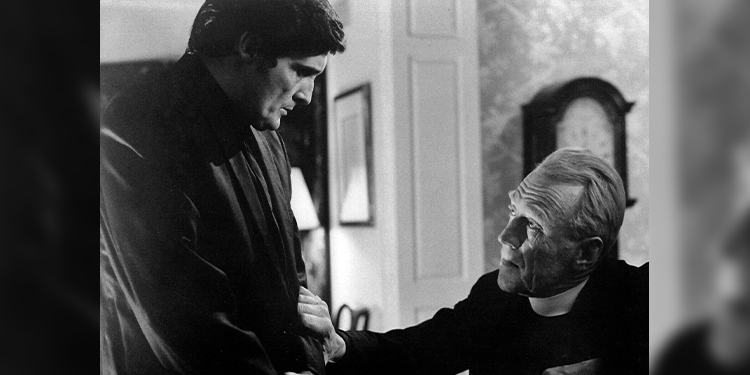
Whether it’s The Exorcist (1973), The Omen (1976) or The Conjuring series (2013-), the Church is often brought into the plots of the biggest films in the genre.
Dr Macintyre said whether it was a horror movie or a Halloween decoration – they drew their interest from a belief in the unseen.
“We as Catholics, believe in many things that are unseen,” he said.
“And in these Hollywood films, oftentimes it’s the noises and the sound effects and just the suggestions of things that may be there or may not be there which is the most fascinating.”
But unlike the strange things that go bump in the night, the Church counters the genre’s effective use of ambiguity with clarity.
A priest entering a scene brings with him an explanation for the events that occurred and a remedy for them – even if the spiritual battle is only just beginning.
In this way, the Church is the resolution to the question posed by the horror story and provides them a way to conclude with a well-earned payoff.
Another reason the genre leans on the Church is the efficiency of cultural memory.
Catholicism dominated the cultural landscape of the western world for centuries.
The Church is easily recognised by a wealth of ancient symbols and images that horror movies can tap into them to provide easy scaffolding to cue to wide audiences what is happening.
A time to reflect
This time of year – Halloween or All Hallows Eve, All Saints Day and All Souls Day – is a time to reflect on life and the departed for the Church.
Dr Macintyre said taking out time for stillness and reflection was important, not only as a Catholic but for everyone.
“I think finding the space and time in our brains and in our ridiculously insane, fast-paced lifestyle today is probably the most challenging part,” he said.
“But I think it’s very beneficial to do that nevertheless.”